ON LOCATION IN
HOLMES COUNTY, OHIO

In 2023
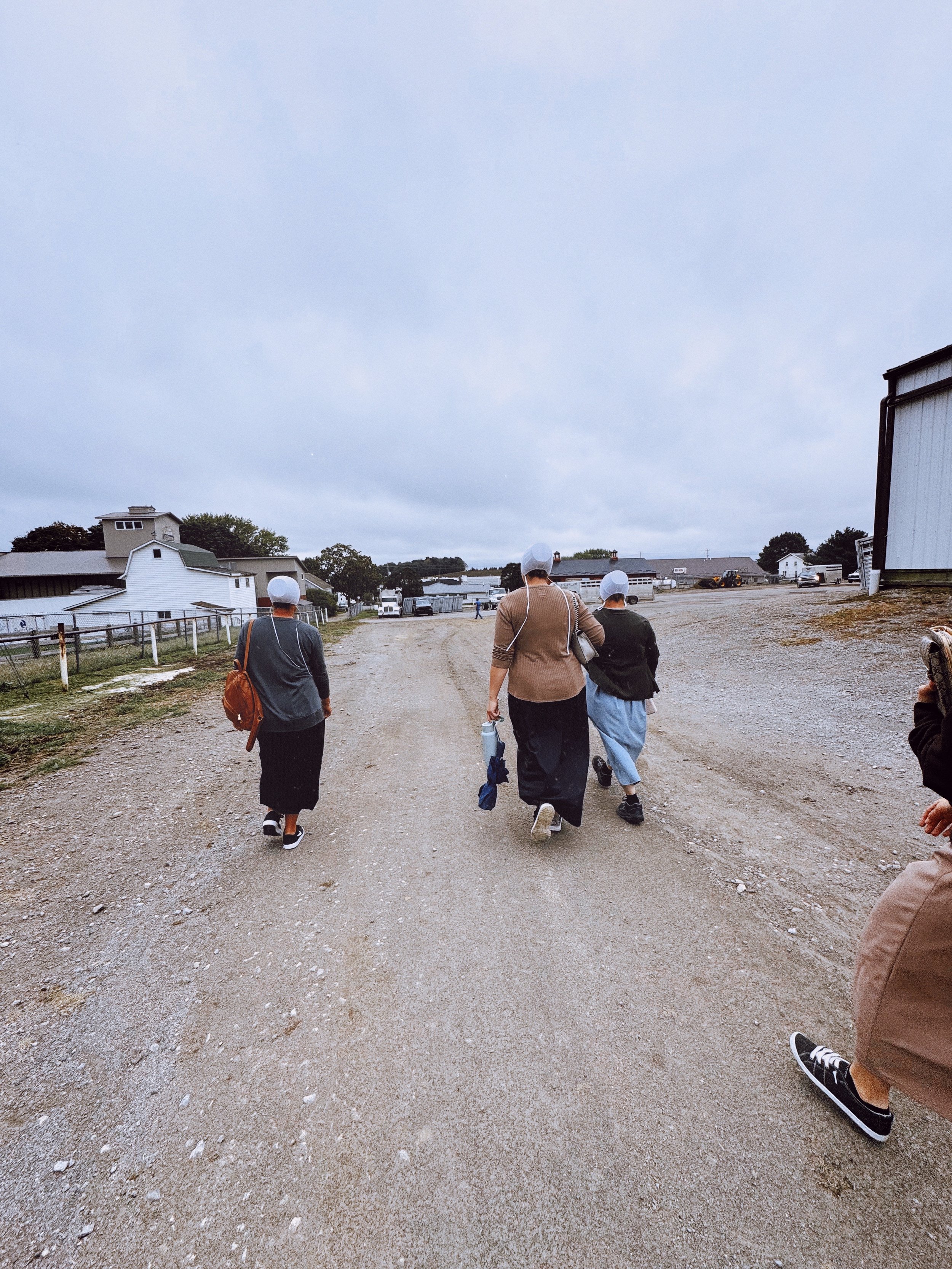
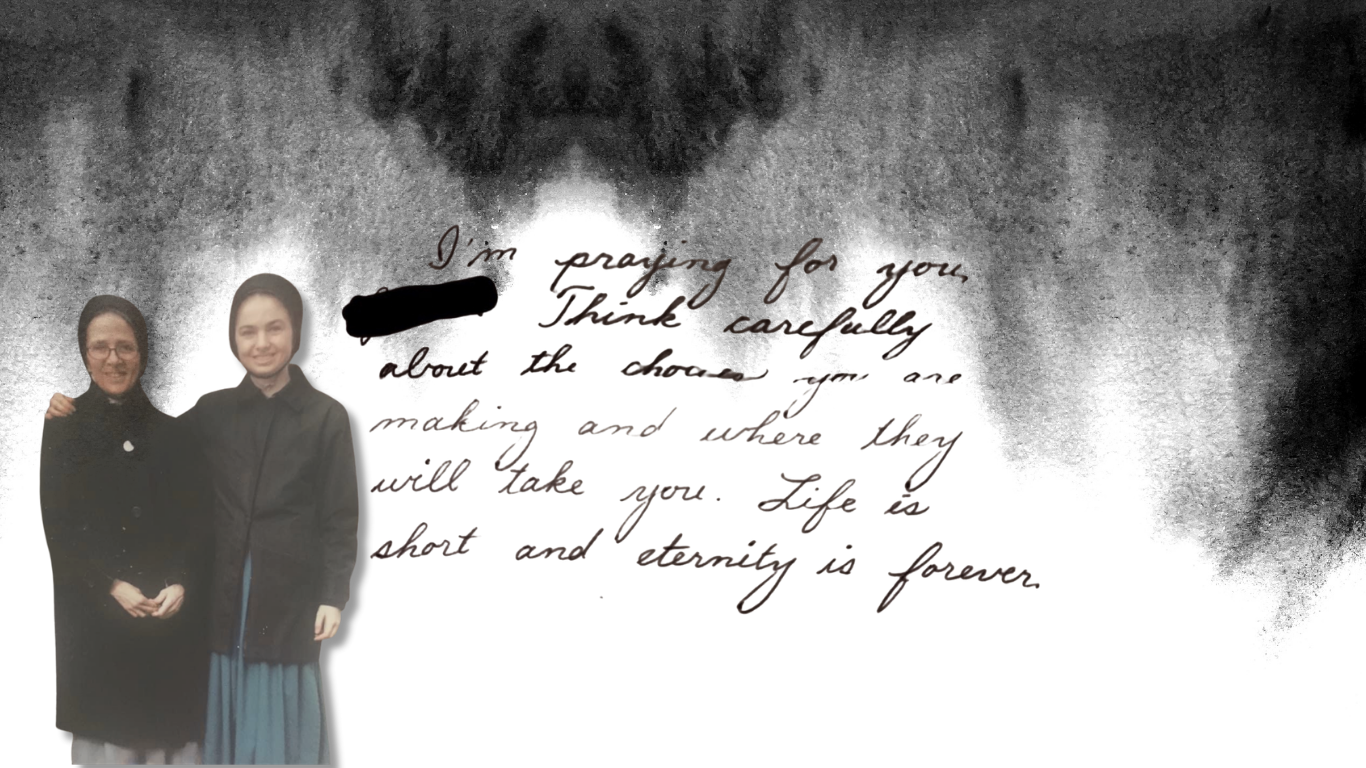
In 2023, I received a phone call from a group of current Amish women in Holmes and Wayne counties, Ohio. Defeated and dismissed, they had reached a point where they felt as if their efforts to engage the community in battling abuse within were being met with strong efforts to shut them down. I offered the podcast as a viable avenue to give their voices an accepting and larger audience who would support them, if they were willing and interested in recording.
They said yes.
When I initially came in the fall to record, much like how I’ve approached all of my creative work with the podcast, I came with an open curiosity, a limited agenda, and a crippling addiction to Diet Coke. Excited to sit in a room full of women willing to risk the backlash of speaking out, we spent the next 2 days unlocking what I later pieced together as a series of barriers current Amish women were facing when trying to remain safe in the church.
BARRIERS CURRENT AMISH WOMEN FACE
·
IN HOLMES COUNTY OHIO
·
NOW AVAILABLE
·
BARRIERS CURRENT AMISH WOMEN FACE · IN HOLMES COUNTY OHIO · NOW AVAILABLE ·
Growing up Mennonite I was always led to believe two things:
One, that if there were issues of “sin” in the church, they were limited and quickly resolved or handled by the church. The second being that I was the main problem. After speaking to hundreds if not thousands of Plain People over the years after leaving and starting the podcast, I’ve found this to be a very common experience for others as well.
Because of this, and the inherent need for survival, I had never spent any time trying to see the barriers preventing Plain People crimes from a broader perspective. It wasn’t until I was in Ohio and recording that the layers began to make sense. Each recording left me with more questions, more puzzle pieces, and an even larger appetite to solve the overwhelming question I believe many of us have:
“Why is Amish crime happening???”
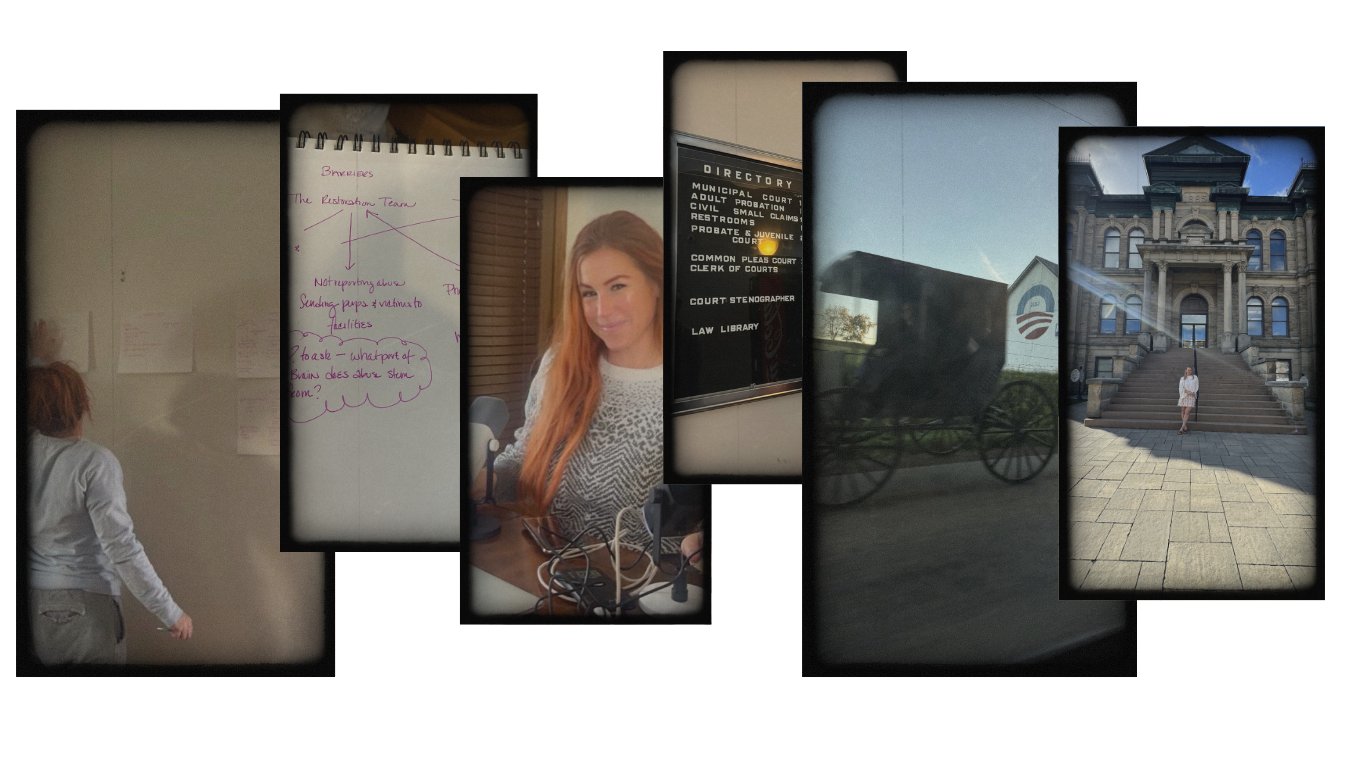
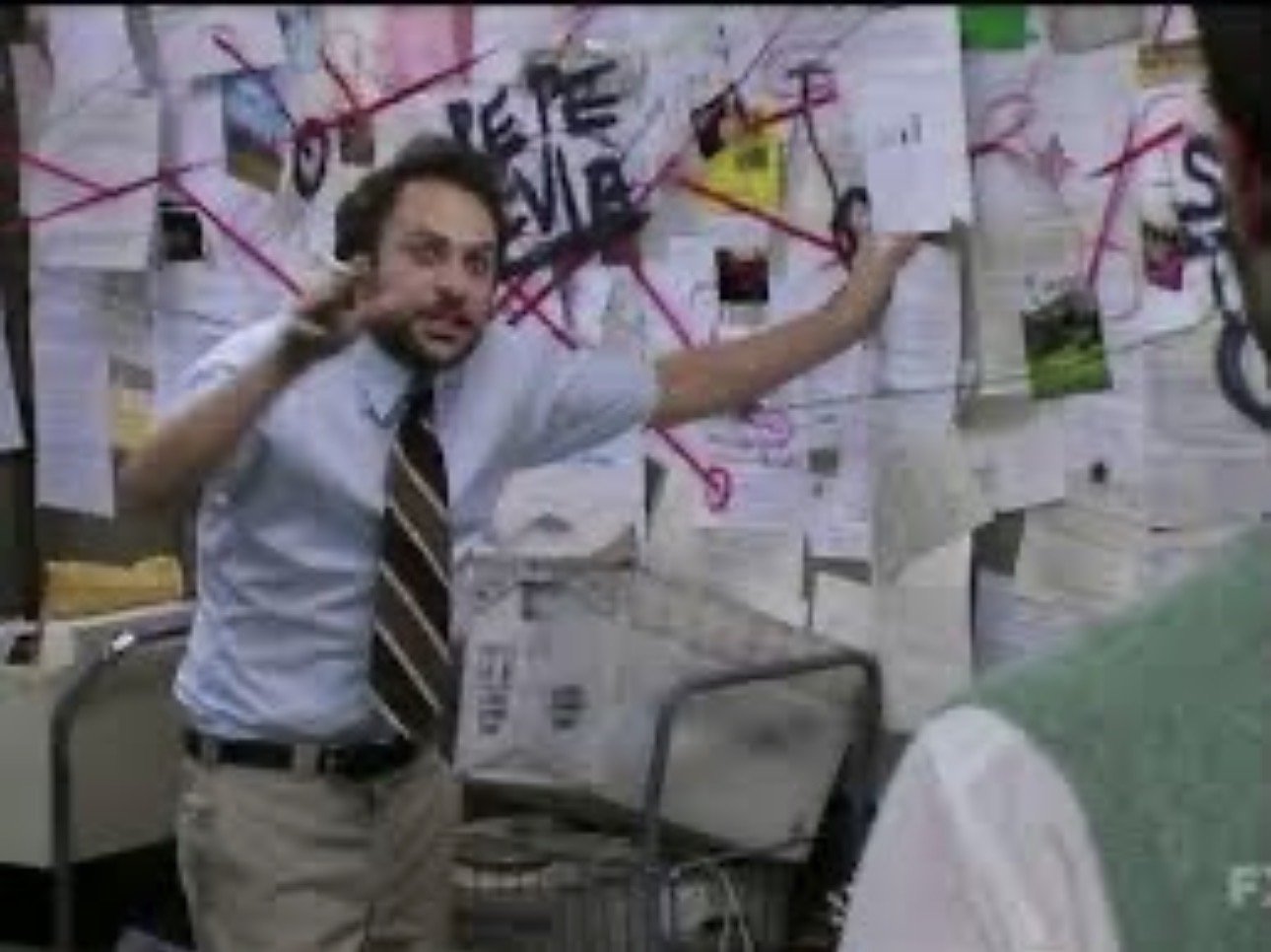
I went home after the initial recordings and got to work mapping things out. I’m a visual kind of gal, and needed to see just how the structures interwove and where the stories fell on the map. I spent over a year developing what felt like a solid understanding of the systems, structures, and internal guidelines shaping Old Order Amish churches in Ohio. The following fall, I returned to attend a community meeting focused on raising awareness of trafficking within Amish communities, hosted by the Harriet Tubman Movement at the Mt. Hope Auction, where I was introduced to a special agent from the Ohio Bureau of Criminal Investigations. After sharing my findings from the previous year, he asked to schedule a follow-up meeting to learn more. While I was there, I also canvassed the surrounding counties, meeting with both a state prosecutor and a judge to better understand how much awareness they had of the dynamics I had uncovered.
It became clear to me that much of the disconnect between local prosecution and Amish communities stemmed from a lack of awareness and cultural understanding. I approached this with intentional curiosity —almost like a market analysis— trying to gauge where key stakeholders were in their knowledge. I left buzzing with the confirmation I needed to move forward in what became clear: There was a desire to further understand the complexities I had spent the last year obsessively unpacking and categorizing.
Before I left the area, I met with two Old Order Amish women whom I had previously recorded with the fall before. They shared story after story with me of young women being abused and the long-suffering sentiment that they wished something could be done, but local law enforcement felt like a lost cause. I suddenly had an idea that came to me over my chicken quesadilla and my trusty partner, Diet Coke. Here’s the recording of that in real time as I flushed it out with the ladies:
Leaving Ohio that night to go home,
I felt excited and hopeful for the first time since starting the podcast. It felt clear to me that this concept of making information and education accessible for Plain women from detectives, legal aid, and other professionals in a comfortable and low-pressure environment might be the next big break in helping women feel safe enough to report abuse. If anything, to not feel alone and isolated in their story.
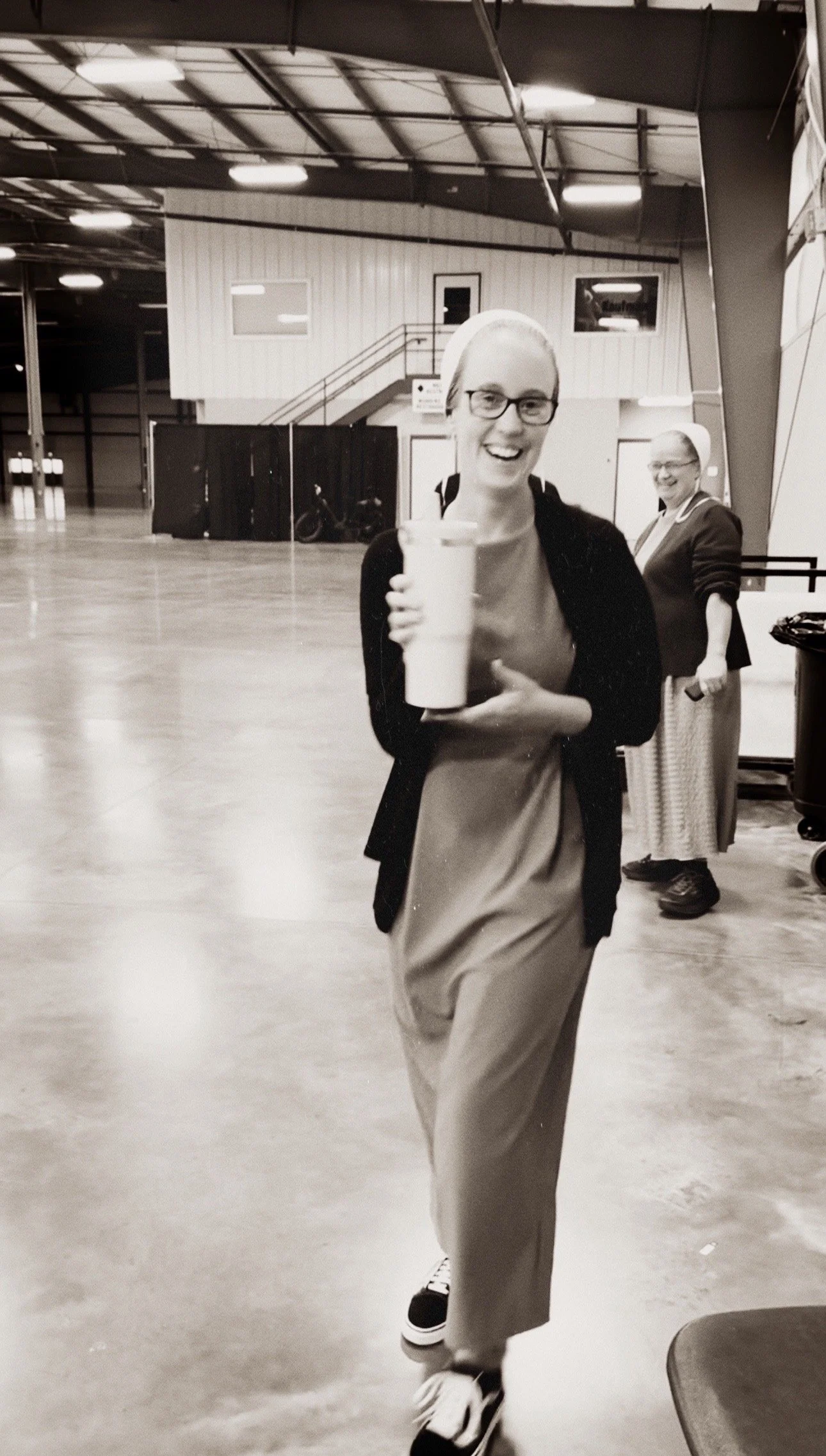
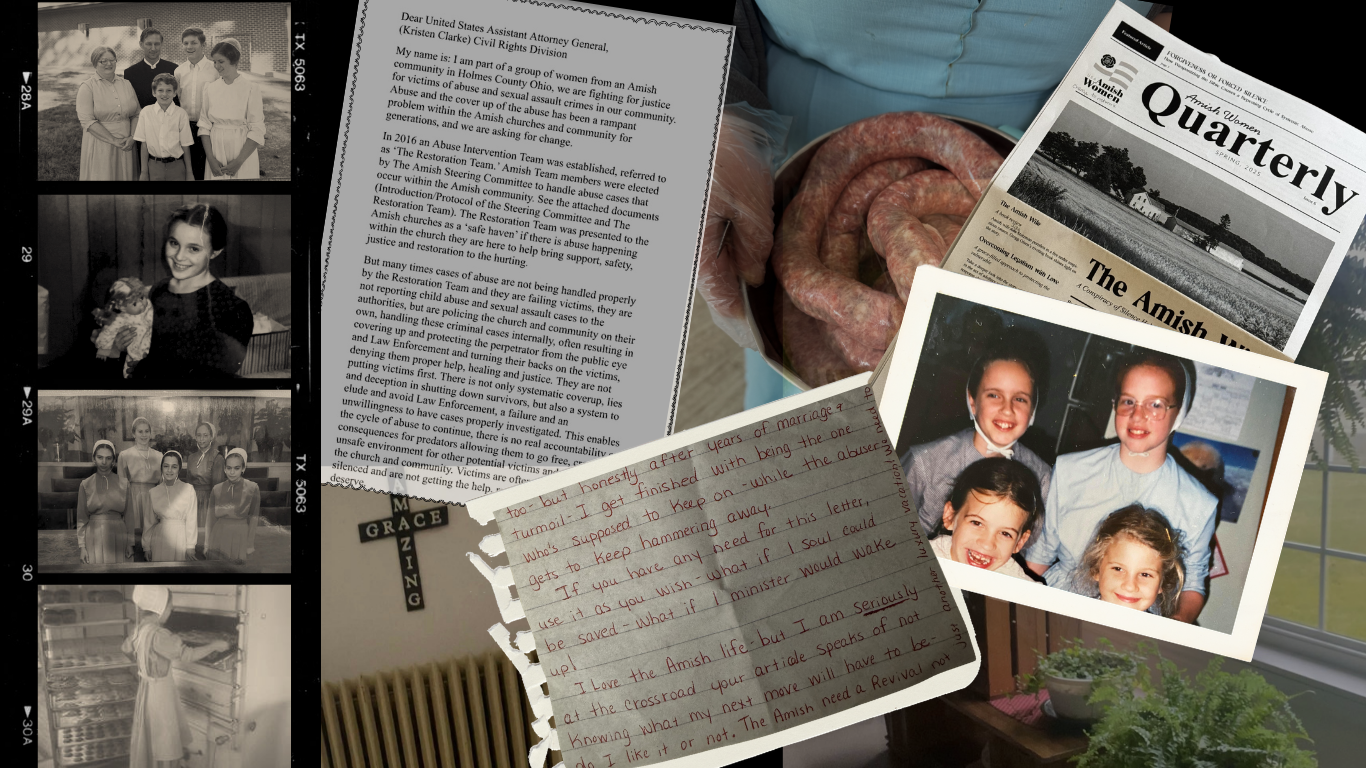
I held our first women’s meeting in December 2024
with close to 20 conservative Amish and Mennonite women attending. We sat for over 5 hours, sharing stories and fears over what they were experiencing, and I asked them what they needed.
Safety, they said. What does safety look like to you? I asked.
The following day, I presented a cultural training to members of Homeland Security and the Ohio Bureau of Criminal Investigations on my findings within the Ohio churches. I informed them of the meeting that had just been held and inquired if anyone from their agencies would be interested in attending, to which they expressed interest and support.
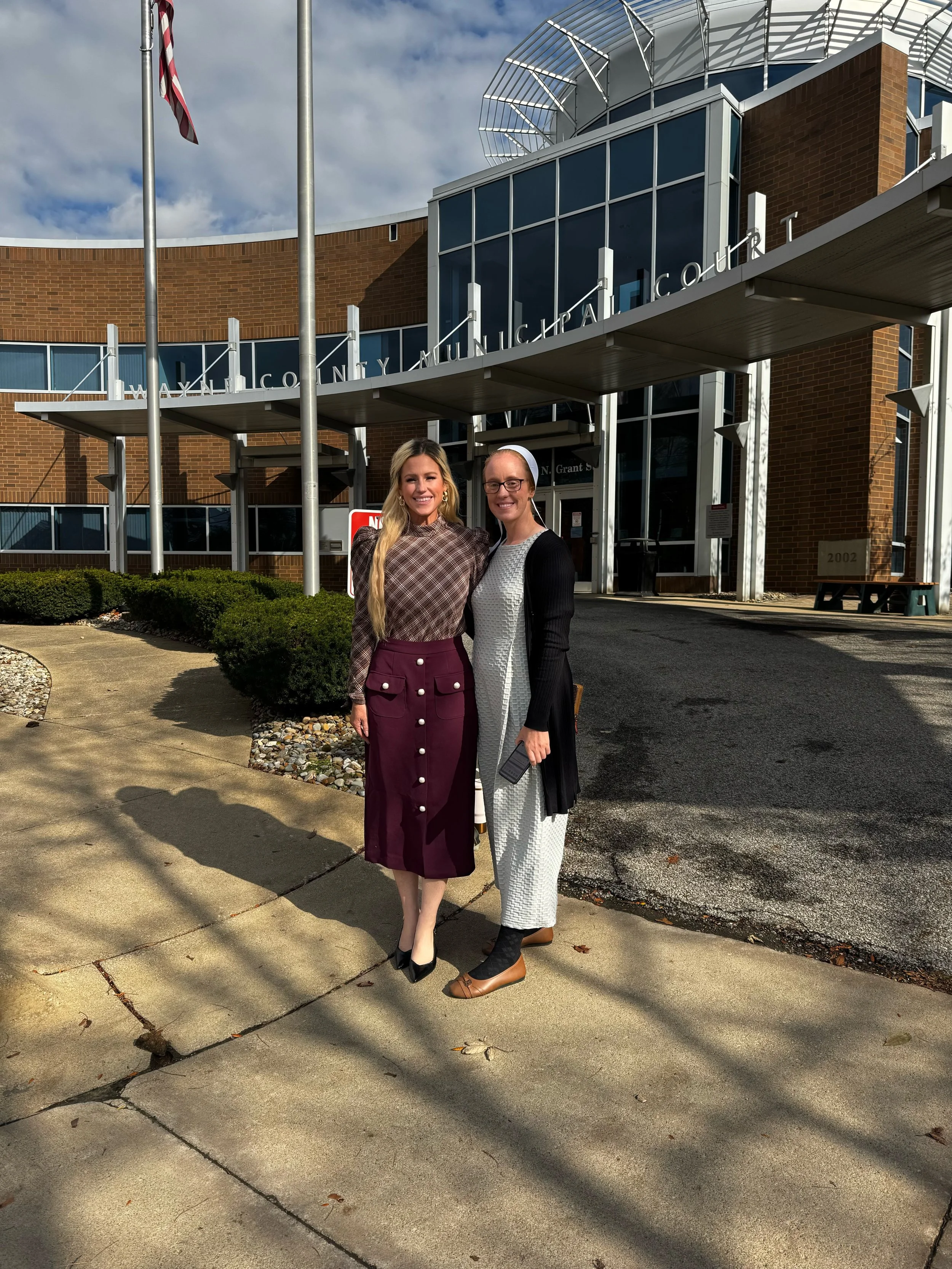
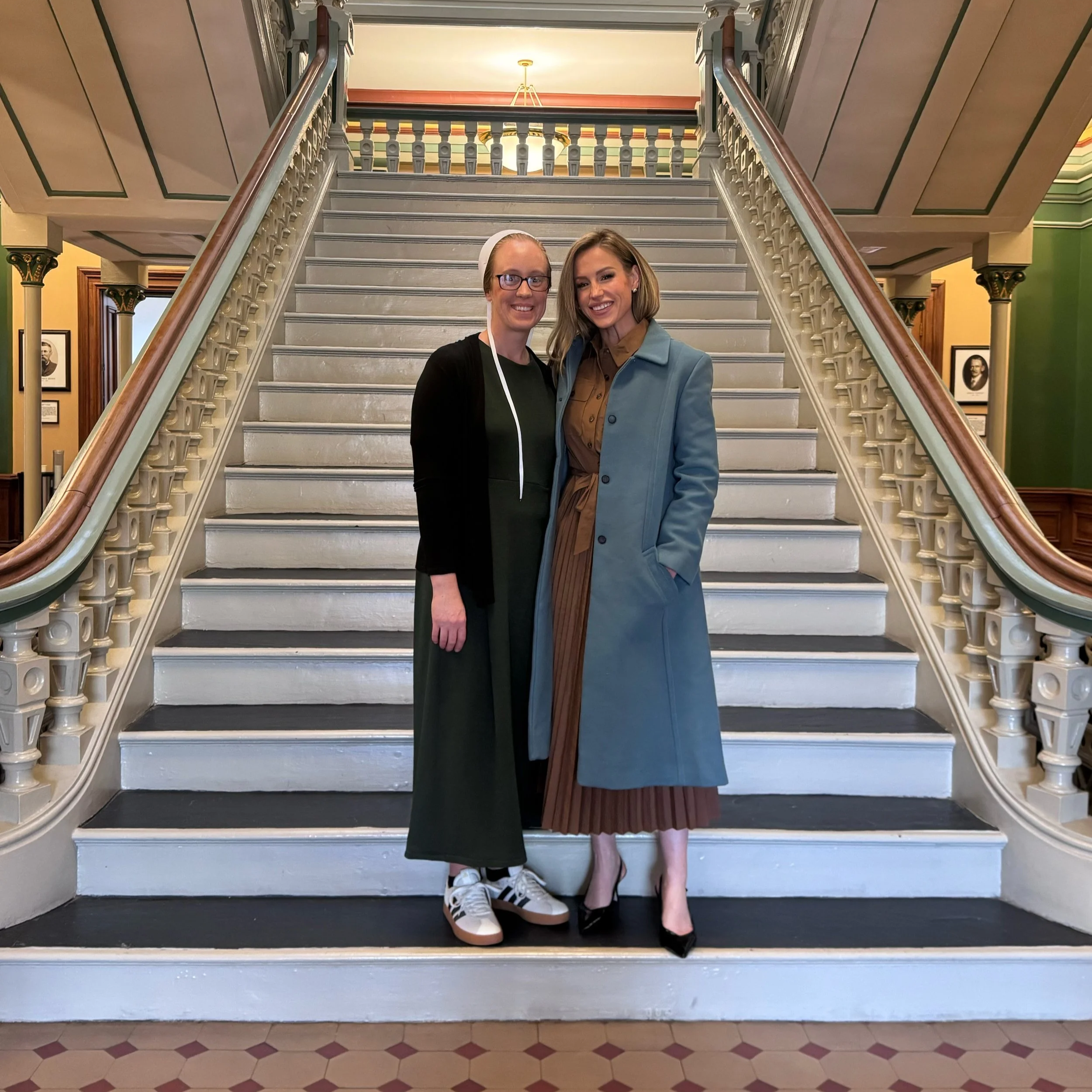
The next women’s meeting was held in Feb of 2025 and had Homeland Security present. Since then, I have brought in victim advocates, federal, state, and local investigators, attorneys, CPS, and former members of the plain community for the ladies, leading to safety planning, reporting, and educational resources being made available should they choose.
And after each meeting, I reward myself with jello salad and a pickled egg if I have time.


I began releasing the recordings on Substack the summer of 2025.
Historically and currently, I have kept the podcast ad-free, self-funding the work and distribution of the stories thus far. I decided to launch my work on Substack in the summer of ‘25 as a way of going more in-depth with the backstory to the recordings in Ohio and as a way to have my work community funded, giving me the means to travel more frequently and host more pro-bono trainings.
Change begins around a kitchen table before it reaches a courtroom.
Some of the work I’m most proud of hasn’t happened behind a microphone or in a courtroom, but around tables — in living rooms, community spaces, and gatherings where women began asking hard questions out loud.
Since that conversation around dinner in 2024, I’ve helped spearhead women’s meetings within Plain communities designed to connect women directly with professionals who may be able to help — from advocates and investigators to trauma-informed service providers and legal resources. What began as small trust-building conversations grew because women asked for more.
Those meetings created space to talk openly about abuse, trafficking concerns, mental health, family pressure, fear of reporting, and the barriers many face when trying to seek help outside the church. Just as importantly, they created opportunities for women to meet professionals face to face, ask questions safely, and begin building trust where little had existed before.
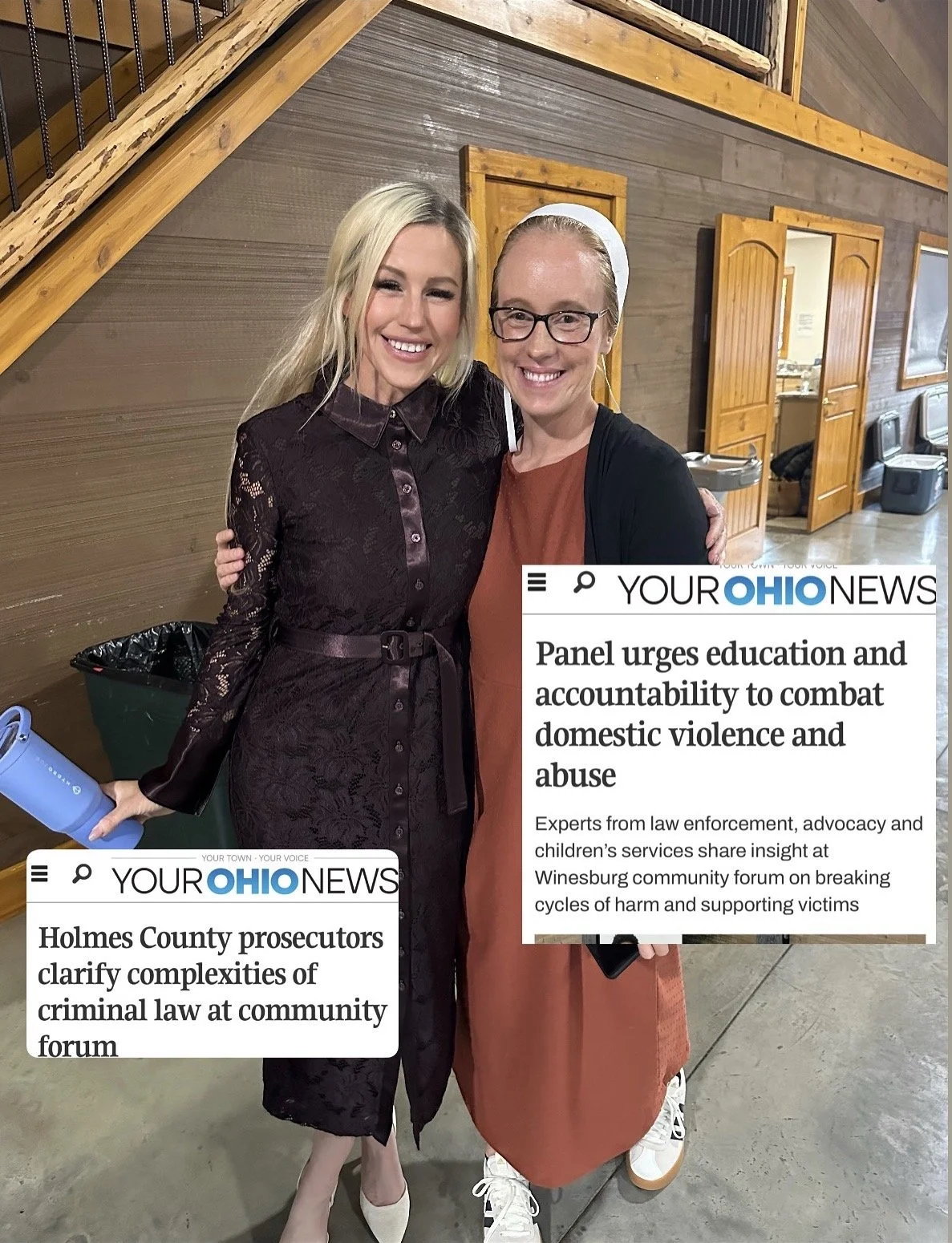
That grassroots organizing eventually led to larger community-wide awareness events I helped host in response to requests from within the community itself — including a public Q&A forum first convened in October and continued through follow-up gatherings shaped by community questions.
These events brought together partners from Ohio Bureau of Criminal Investigation, Homeland Security Investigations, the Ohio Attorney General’s Human Trafficking Task Force, and local stakeholders, not simply as presenters, but as accessible resources in conversation with the community.
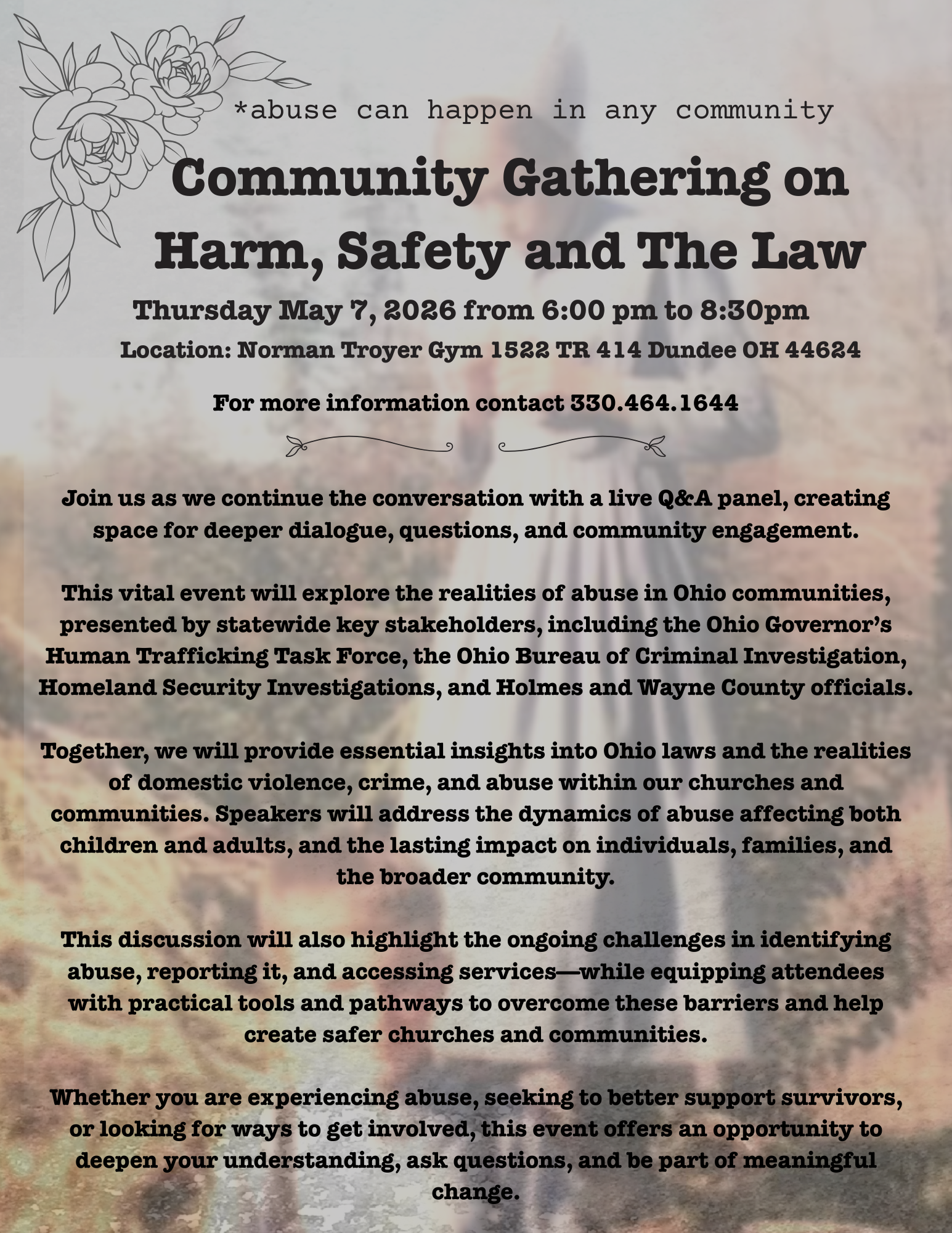
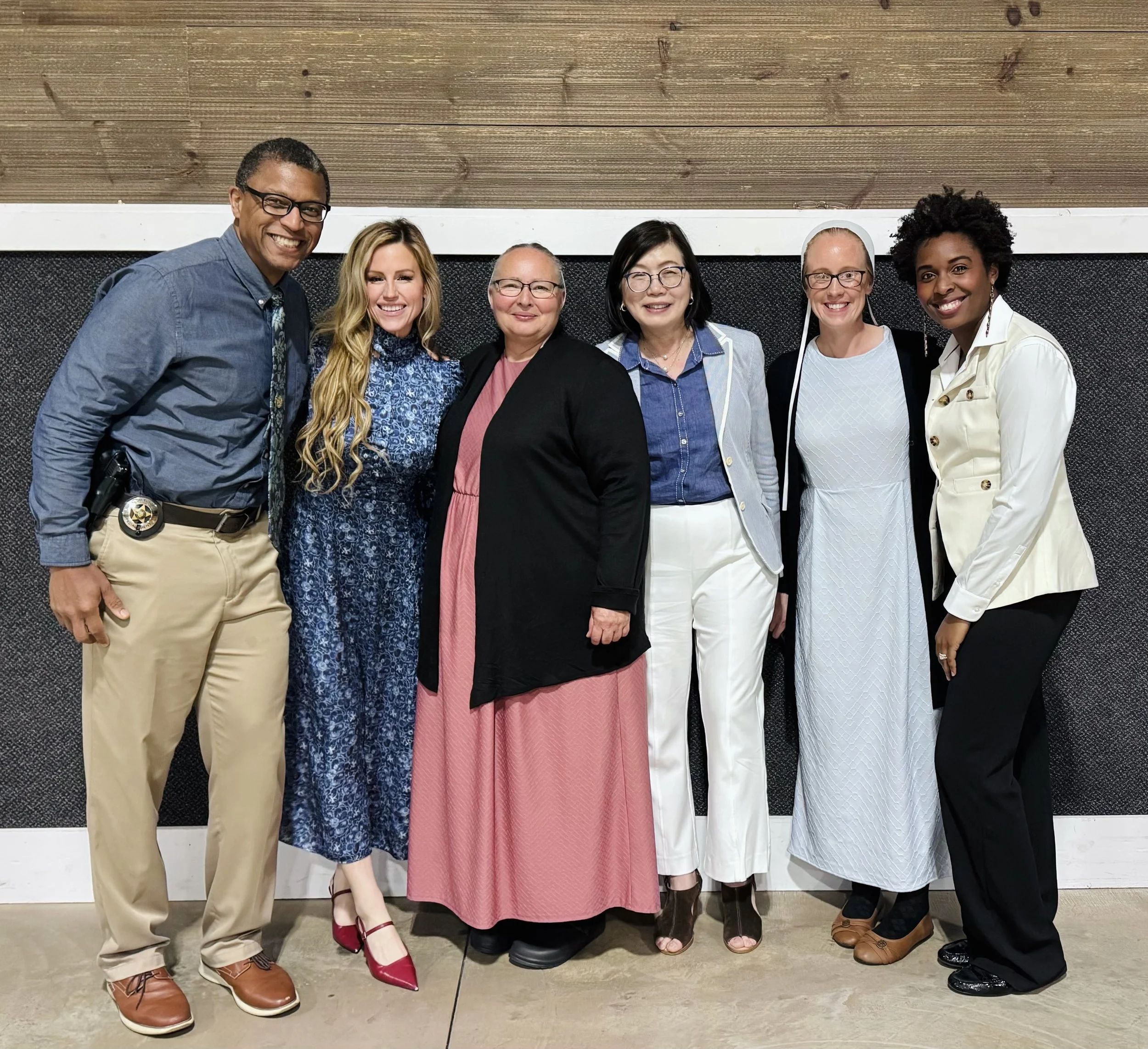
Designed around dialogue rather than lectures, these gatherings have included moderated Q&A panels, opportunities for anonymous question submissions, refreshments and informal fellowship, as well as private opportunities to speak one-on-one with detectives and professionals after the event.
That structure mattered. It allowed difficult questions — many of them long held in silence — to surface in ways that felt safer, practical, and community led.
Conversations have addressed:
Abuse and coercive control in Plain communities
Human trafficking concerns and barriers to reporting
Mental health and access to outside support
Cultural dynamics affecting investigations and prosecution
Survivor resources, safety planning and accountability
Ohio law, reporting processes and navigating public systems
This work has never been just about awareness for awareness’ sake. It has been about creating pathways — connecting people to resources, building trust with systems that often feel inaccessible, and helping communities engage hard realities together.
I believe some of the most meaningful systems change starts in community long before it reaches policy or prosecution.
Moving forward in 2026 with Plain Culture Advisory Group
Plain Culture Initiative grew out of years of asking one question: what would it look like to move beyond documenting harm and actually help build better responses?
That question now shapes our work through consulting, trainings, community engagement and systems change efforts rooted in lived relationships, cultural nuance and practical action.
Out of years of fieldwork, relationship-building, media work, and direct community engagement, Plain Culture Initiative emerged as a way to formalize and expand this work.
What began through storytelling, advocacy, women’s meetings, trainings, and collaboration with agencies has grown into a broader initiative focused on cultural expertise, systems education, and practical response.
Plain Culture Initiative exists to help institutions better understand and respond to abuse, trafficking, coercion, and systemic barriers within Amish, Mennonite, and other Plain communities — while also supporting community members seeking safer pathways and stronger resources.
Our work sits at the intersection of consulting, training, convening and case-informed expertise.